
A cleanroom (also spelled clean room) is a specialized enclosure designed for professional industrial manufacturing or scientific research. These spaces are essential in the production of pharmaceuticals, integrated circuits, CRTs, LCDs, OLEDs, microLED displays, and other advanced technologies.
Cleanrooms are specifically engineered to maintain extremely low levels of airborne particulates, such as dust, airborne microbes, or aerosolized particles. More precisely, a cleanroom operates with a controlled level of contamination, defined by the number of particles per cubic meter at a specified particle size. The term cleanroom can also refer to any designated enclosed space where environmental parameters—such as particulate contamination, temperature, humidity, and differential pressure—are strictly controlled.
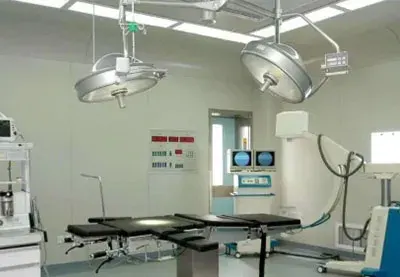
In the pharmaceutical context, a cleanroom refers to a room that complies with the GMP sterile specifications (i.e., Annex 1 of the EU and PIC/S GMP guides, as well as other standards and guidelines required by local health authorities). It represents an integrated combination of engineering design, manufacturing, finishing, and operational controls (control strategies) necessary to convert an ordinary room into a compliant cleanroom.
Cleanrooms are utilized across various industries wherever small particles could adversely affect manufacturing processes. They vary significantly in size and complexity, finding broad application in semiconductor manufacturing, pharmaceuticals, biotechnology, medical devices, and life sciences. Furthermore, they are crucial in critical manufacturing processes within the aerospace, optics, defense, and energy sectors.
A Brief History of Cleanrooms
The modern cleanroom was invented by American physicist Willis Whitfield. As an employee at Sandia National Laboratories, Whitfield conceived the initial designs for the cleanroom in 1966. Prior to his invention, early cleanrooms frequently suffered from persistent particulate contamination and unpredictable airflow. Whitfield’s cleanroom design incorporated a constant, highly filtered airflow system to maintain continuous environmental purity within the space.
Most of the integrated circuit manufacturing facilities in Silicon Valley were built by three major companies: MicroAire, PureAire, and Key Plastics. These companies manufactured laminar flow units, glove boxes, cleanrooms, and air showers, alongside chemical tanks and workstations designed for integrated circuit "wet processing." They were also pioneers in adopting Teflon for air guns, chemical pumps, scrubbers, water guns, and other equipment essential for semiconductor fabrication. William (Bill) C. McElroy Jr. served as the engineering manager, drafting room supervisor, QA/QC manager, and designer across these three companies. His innovative designs added 45 original patents to the technology of that era.
Airflow Principles in Cleanrooms
Cleanrooms control airborne particulates using HEPA (High-Efficiency Particulate Air) or ULPA (Ultra-Low Penetration Air) filters, operating on either laminar (unidirectional) or turbulent (non-unidirectional) airflow principles.
Laminar (Unidirectional) Airflow Systems: Filtered air is directed downward or horizontally at a constant velocity toward exhaust filters located near the floor or recirculated through raised perforated floor tiles. Laminar airflow systems typically cover around 80% of the cleanroom ceiling to maintain continuous air purity. Stainless steel or other non-shedding materials are used to construct laminar airflow filter frames and hoods to prevent extra particles from entering the airstream.
Turbulent (Non-Unidirectional) Airflow Systems: These systems use laminar air hood configurations and non-specific velocity filters to keep the air in constant motion, though not all flowing in the same direction. The turbulent air stream traps airborne particles and drives them toward the floor, where they enter the return filters and are exhausted from the cleanroom environment.
Vector Airflow Systems: In some specialized applications, air is supplied through fan-shaped high-efficiency filters installed at the upper corner of the room (or standard HEPA filters fitted with fan-shaped supply diffusers), with return air grilles placed at the bottom of the opposite wall. The ideal height-to-length ratio for a vector cleanroom is generally between 0.5 and 1. These setups can achieve cleanliness levels up to ISO Class 5 (Class 100).
Unit Features and Scope of Application
Featuring an advanced computer control system, the unit includes randomized delayed startup for high reliability and exceptional energy savings. It utilizes high-efficiency scroll compressors to deliver efficient, eco-friendly operation, alongside multiple air supply and cooling configurations to meet diverse airflow organization requirements.
Scope of Application:
EDP Data Centers
Program-Controlled Telephone Exchange Rooms
Network Management Centers
Precision Data Equipment Processing Centers
Satellite Ground Stations
Control Centers
High-Tech Research Environments
IDC Data Centers
Medical Clean Constant Temperature & Humidity Series
Appearance: Constructed with an aluminum alloy frame and double-sided color-coated steel panels, offering a clean, modern, and high-end finish.
Intelligent Control: Equipped with a user-friendly microcomputer control system that supports multiple operational modes to precisely regulate indoor temperature and humidity. It features an indoor-temperature-priority control logic to guarantee optimal environmental stability in clean operating rooms. Flexible configurations are available, including direct expansion (DX), heat pump, and chilled water models.
Direct Expansion (DX) Units: Features built-in cooling sources utilizing fully enclosed scroll compressors for high efficiency, stable operation, low failure rates, and minimal noise.
Fresh Air Handling Units: Primary, medium, and sub-high-efficiency filters all feature high-capacity, high-performance media with exceptional water resistance, high structural strength, and moisture protection.
Variable Air Volume (VAV): Units can be paired with variable frequency drives (VFDs—optional accessory) for constant or variable air volume control, meeting tailored client requirements.
Sterilization Options: UV germicidal lamps can be installed upstream of the filters to effectively eliminate bacteria in circulating air and on filter surfaces.
Drain Pan: Uses a seamless stainless-steel condensate pan without transverse joints, completely eliminating standing water accumulation
Clean-Type Water-Cooled Constant Temperature & Humidity HVAC Series
Unit Features & Applications
Appearance: Engineered with an aluminum alloy frame and double-sided color-coated steel panels for a clean, durable, and sophisticated appearance.
Control System: Temperature and humidity controllers feature full-computer touchscreen controllers or optional PLC programmable controllers to deliver high control precision.
Filtration: Filters with varying efficiency levels can be fitted at air inlets and outlets based on specific requirements.
Heating Options: Standard configurations feature electric heating; steam or hot water heating coils can be customized upon request.
Humidification Options: Standard units use electrode humidifiers, with steam humidification available as a custom option.
Extremely well-suited for pharmaceutical facilities, healthcare environments, electronics manufacturing, bioengineering, food processing, precision instrumentation, aerospace, and any other industry with strict cleanroom requirements for temperature, humidity, and cleanliness.